Redecor, Playtika Studio
Industry
Gaming
Client
Playtika
Service
Product Design
Date
2023-2025
Redecor is a mobile interior design game where players express their creativity through room customization, design challenges, progression systems, and rewards.
As a Product Designer at Playtika’s Redecor studio, I led end-to-end design across core progression, engagement, and monetization experiences. I shaped features from early concept through interaction, visual design, motion, and launch—turning complex game systems into clear, rewarding, and scalable player experiences.
Selected Work:
01 · Makeover
A recurring progression event where players transform themed spaces, unlock new scenes, earn rewards, and advance through a multi-stage journey.
02 · Designer Status
A long-term progression system that guides players from beginner to top-tier designer through victories, rewards, and personalized 14-day cycles.
03 · Daily Tasks
A daily challenge system that connects short-term goals with weekly milestones, rewards, and a larger progression loop.
04 · Prize Wheel
A scalable free and premium reward experience designed to strengthen engagement, anticipation, and monetization across recurring themes and events.

Makeover: Turning Creative Play Into a Recurring Progression Event
Makeover is a recurring Redecor event where players transform themed spaces across multiple stages, unlocking new scenes, rewards, and visual changes as they progress.
I led the end-to-end product design of the feature, shaping the experience from event discovery and scene progression to monetization, rewards, motion, and completion.
The opportunity: Redecor needed a repeatable event format that could create short-term goals, encourage players to return, and introduce new monetization opportunities without feeling disconnected from the core decorating experience.
The opportunity was to turn a single design session into a longer progression journey, giving players a clear sense of momentum, anticipation, and reward throughout the event.
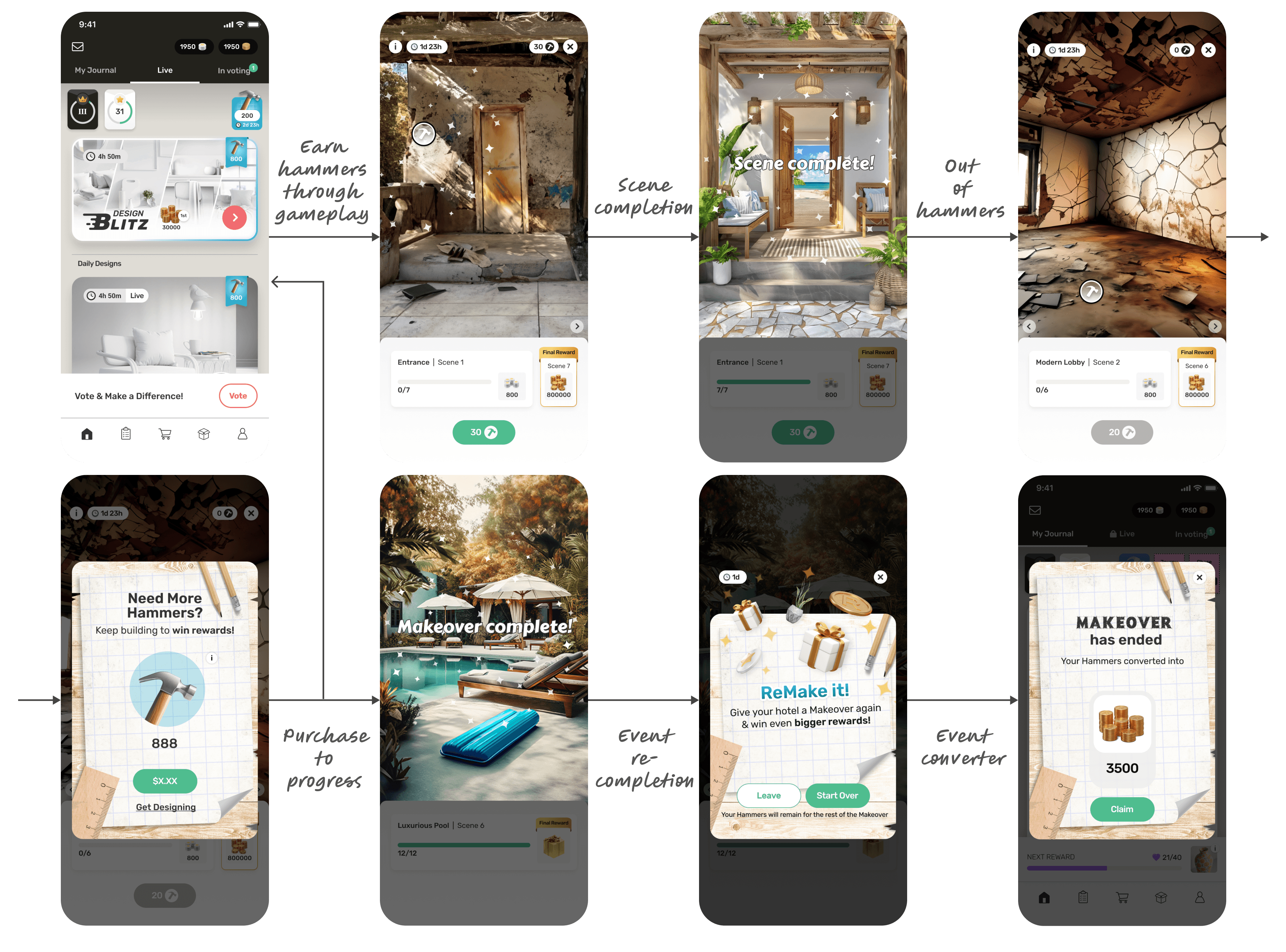
Key product decisions: I structured the event around clear, step-by-step progression, with visible milestones and intuitive entry points that helped players understand where they were and what they needed to do next.
I created a cohesive visual language aligned with Redecor’s premium aesthetic and used Rive to animate hotspots, scene transitions, and event completion. These moments made progress feel more tangible and rewarding at key milestones.
I also designed reusable templates for offers, rewards, and event content, enabling the team to launch future Makeover events more efficiently while maintaining a polished and consistent experience. The reusable Rive system reduced development workload by 75%, while the feature contributed to a 5% increase in revenue and strengthened engagement, retention, and in-game currency spend.

Designer Status: Turning Progression Into Long-Term Motivation
Designer Status is Redecor’s core progression system, guiding players through a journey from beginner to top-tier designer. Players advance through victories, unlock rewards, and maintain their status through recurring 14-day cycles.
I redesigned the experience end-to-end, from onboarding and progression to tier maintenance, rewards, and long-term engagement.
The opportunity: The existing system needed to support two very different audiences: new players learning Redecor’s core mechanics and experienced players looking for meaningful goals beyond individual design challenges.
The opportunity was to make progression easier to understand, more rewarding to pursue, and motivating enough to sustain repeated play over time.
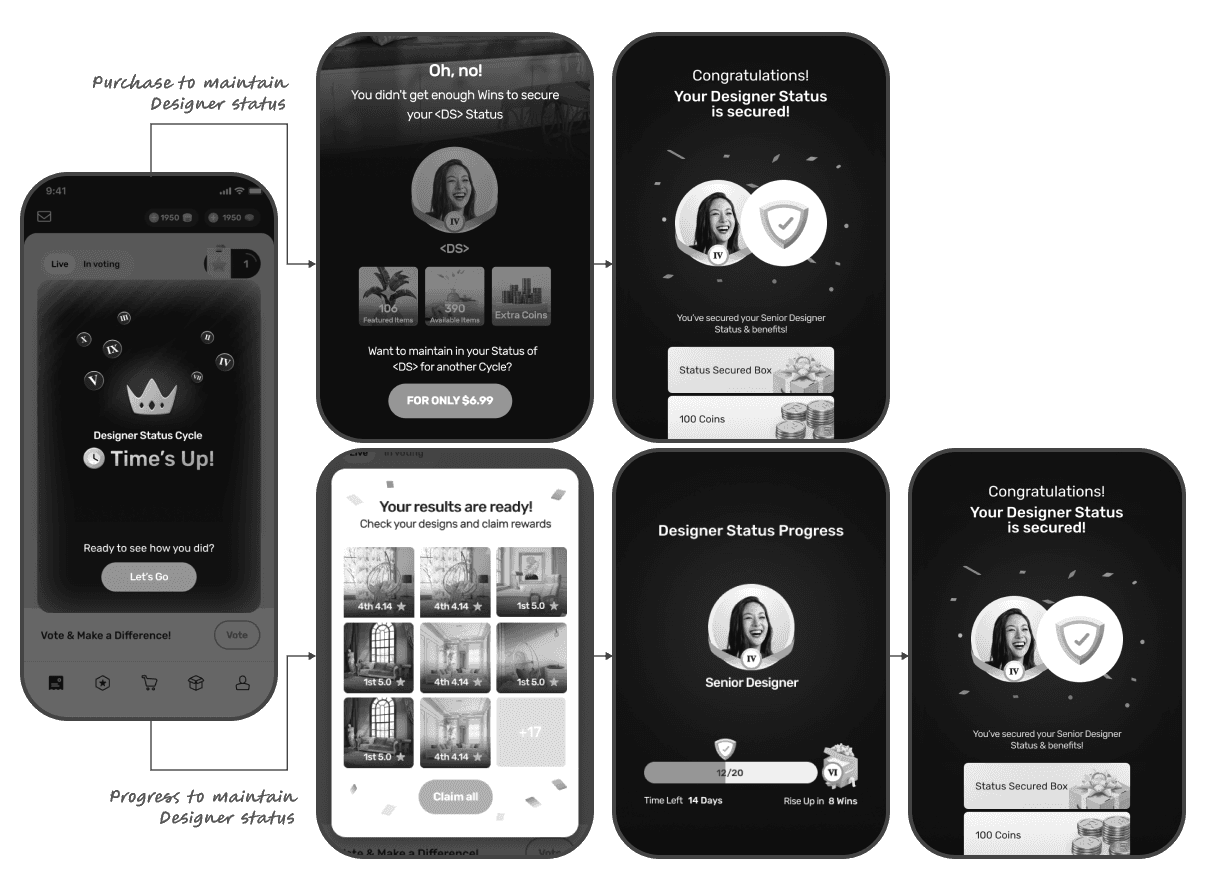
Key Product Decisions: I simplified the onboarding flow to introduce Designer Status, victories, and in-game currencies gradually, helping new players understand how their actions contributed to progression.
I refreshed the visual system to make each tier, milestone, and reward feel more distinct and achievable. Clearer hierarchy and progress indicators helped players immediately understand their current status, what they had earned, and what was required to advance.
To support long-term engagement, I introduced a personalized 14-day progression cycle that gave players a clear timeframe to advance or maintain their tier. The mechanic created urgency without relying solely on one-time rewards, encouraging consistent play across multiple sessions.
The redesigned experience connected onboarding, progression, and retention within one cohesive system, giving new players clearer direction while offering experienced players stronger goals, more meaningful rewards, and an ongoing reason to return.

Daily Tasks: Turning Everyday Actions Into a Weekly Progression Loop
Daily Tasks introduced a structured challenge system that gave players clear goals to complete each day while contributing to a larger weekly journey.
I led the end-to-end design of the experience, from the task system and progression model to rewards, claim interactions, motion, and completion feedback.
The Opportunity: The previous task experience offered limited variety and little sense of momentum beyond completing individual objectives. Without meaningful progression or time-based goals, players had fewer reasons to return consistently.
The opportunity was to connect short, achievable daily actions to a broader weekly objective, creating a repeatable loop that supported different play styles while making every completed task feel valuable.
Key Product Decisions: I designed the Tasks tab with a clearer hierarchy, making the three daily objectives, remaining time, rewards, and overall weekly progress easy to understand at a glance.
The system included tasks across different difficulty levels, allowing players with varied habits and levels of commitment to participate. I collaborated with the game economy team to balance the effort required for each task with rewards that felt fair and motivating.
Completed tasks contributed to a shared weekly progression bar, where players unlocked milestone rewards before reaching a larger grand prize. This connected individual actions to a visible long-term goal and gave players a stronger reason to return throughout the week.
I also designed the full reward flow: a notification indicated when a task was complete, the relevant card transitioned into a claimable state, and motion and visual feedback reinforced the moment of collection. Each claimed task then advanced the weekly bar and revealed the next milestone.
The result was a clearer and more rewarding progression system that strengthened daily engagement, encouraged consistent weekly play, and made routine actions feel connected to a larger sense of achievement.

Prize Wheel: Turning Rewards Into a Scalable Engagement Loop
The Prize Wheel introduced a playful reward mechanic that felt native to Redecor’s creative world. Players could spin for currencies, boosters, and exclusive items through both free and premium experiences.
I designed the end-to-end experience, from the wheel structure and reward presentation to the spin, reveal, and collection moments.
The Opportunity: Redecor needed a repeatable reward experience that could encourage interaction, support retention, and create new monetization opportunities without feeling disconnected from the core product.
The opportunity was to transform a familiar game mechanic into an experience that reflected Redecor’s premium aesthetic and could evolve across events, themes, and reward structures.
Key Product Decisions: I designed two complementary versions of the experience:
- The Free Wheel used a playful designer-workspace aesthetic to encourage repeat engagement and provide accessible rewards.
- The Premium Wheel introduced a more elevated visual language, exclusive rewards, and a paid entry point designed to strengthen perceived value.
The interface kept the available rewards, spin action, and winning result immediately clear. Motion and reveal states built anticipation before the spin and created a stronger sense of satisfaction when the reward was collected.
I also created the experience as a flexible visual system that could be adapted to seasonal themes, special events, and different reward configurations without redesigning the core mechanic.
The result was a scalable reward format that supported both recurring engagement and monetization while remaining consistent with Redecor’s visual identity.


